
The Supreme Court on Monday agreed to hear on August 22 a matter involving a row between the All India Football Federation (AIFF) and Football Sports Development Limited (FSDL) over the fate of 11 Indian Super League (ISL) clubs due to the non-renewal of their contracts with the national federation and the tournament's organisers.

As soon as one of the pleas came up for hearing on Friday, Solicitor General Tushar Mehta, appearing for the Centre, objected and said there can't be an "endless" filing of pleas challenging the Act.

A bench comprising Chief Justice B R Gavai and Justice K Vinod Chandran took note of the submissions of a lawyer that the plea, filed through TVK's secretary Aadhav Arjuna, be listed for hearing.

Supreme Court Justice B V Nagarathna dissented against the collegium's recommendation to elevate Patna High Court Chief Justice Vipul Manubhai Pancholi to the Supreme Court, citing concerns about seniority, regional representation, and the circumstances of his earlier transfer.

While the National Investigation Agency (NIA) sought a stay on the operation of the bail order so as to appeal before the Supreme Court, the HC refused the request, stating that Babu has been in jail for over five years.
The Supreme Court has scheduled a hearing for November 12 to address the statutory age of consent for adolescents, emphasizing the need for a continuous and comprehensive examination of the issue. The Centre defends the current age of consent, while an amicus curiae suggests lowering it.

The SC said every day, hundreds of dog bites were being reported in the city and on its outskirts, leading to rabies and ultimately, children and the aged were falling prey to the dreadful disease.

The Supreme Court turned down Tamil Nadu government's plea to modify its order suspending a one-man enquiry commission and the SIT to look into the Karur stampede. The court also took a critical view of a report filed by the Madras High Court registrar general.
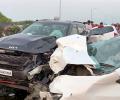
The Supreme Court of India is considering formulating pan-India guidelines to prevent road accidents on expressways and national highways, following a fatal accident in Rajasthan. The court is focusing on the issue of illegal 'dhabas' and encroachments along highways as potential causes of accidents.
The Supreme Court of India has stated it will not monitor every instance of hate speech, citing existing legal and institutional mechanisms.
The latest crisis emerged after the All India Football Federation (AIFF) could not find a new commercial partner for the conduct of domestic league, including the top-tier Indian Super League.

The Supreme Court granted bail to Arvind Dham in a money laundering case, emphasizing that prolonged incarceration without trial violates the right to a speedy trial under Article 21 of the Constitution.

Union Home Minister Amit Shah criticised the Congress party for its alleged inaction in addressing Maoist violence during its long rule, while highlighting the Modi government's success in nearly eradicating Maoists from Bastar, Chhattisgarh.

Both sides have now revealed a preference for escalation over strategic defeat, and each new provocation narrows the space for the next pause. The Touska seizure, Iran's refusal to negotiate under blockade, Israel's strikes on Iranian oil infrastructure -- all of these add up to an increasingly untenable situation. This makes the wild card -- Trump and his motormouth -- more consequential than ever, notes Prem Panicker in his must read blog on the Iran War.
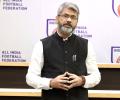
Majority of state units favour dual posts, AIFF calls SGM on Nov 24 to vote on matter
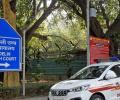
The Delhi High Court Chief Justice, D K Upadhyay, has submitted a report to the Chief Justice of India, Sanjiv Khanna, regarding the alleged discovery of cash at Justice Yashwant Varma's official residence. The report follows an in-house inquiry initiated by Justice Upadhyay after a fire at Justice Varma's residence on Holi night. The Supreme Court Collegium will now examine the report and may take further action. The Supreme Court has also stated that a proposal to transfer Justice Varma to the Allahabad High Court is separate from the in-house inquiry.
The Supreme Court collegium has recommended the appointment of Karnataka High Court Chief Justice N V Anjaria, Gauhati High Court Chief Justice Vijay Bishnoi, and Bombay High Court judge Justice A S Chandurkar as judges of the Supreme Court. The five-member collegium, headed by Chief Justice B R Gavai, decided to recommend the names to fill three existing vacancies in the top court. The appointments follow the superannuation of former Chief Justice Sanjiv Khanna, and Justices Abhay S Oka and Hrishikesh Roy. The Supreme Court, which has a sanctioned strength of 34 judges, is currently working with 31 judges.
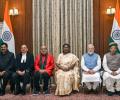
The Supreme Court's opinion on the presidential reference can impact on any number of cases if and when governors, if not the President, take a literary view of the Supreme Court's 'ppinion' on their 'discretionary powers' without reference to the rider on 'reasonable time', points out N Sathiya Moorthy.

The Tamil Nadu government has informed the Supreme Court that the Karur stampede, which resulted in 41 deaths, was caused by the "reckless and uncoordinated actions" of the TVK party's organizers and workers. The government's affidavit alleges an intentional delay by party leader Vijay, contributing to the tragedy.

Tamil Nadu's ruling DMK has filed a petition in the Supreme Court challenging the Election Commission's plan to implement the Special Intensive Revision of electoral rolls in the state.

The Supreme Court on Friday asked the Law Commission to consider a plea as a representation of a Buddhist group that certain sets of personal Hindu laws, which are applicable to Buddhists also, are against their fundamental rights, including freedom to practice religion.

The share of none of the above (NOTA) option went up marginally this time in the Bihar assembly polls as compared to the last elections but is still much lower than 2015, data shared by the Election Commission shows.

Surendra Koli, accused in the infamous Nithari serial killings, has been released from the Luksar district jail in Greater Noida, a day after the Supreme Court acquitted him in the last pending case linked to the 2006 serial murders that had shocked the nation, officials said on Thursday.
The Supreme Court acknowledged a clean chit from a special investigation team (SIT) regarding the Vantara zoological rescue and rehabilitation centre in Gujarat's Jamnagar, following allegations of irregularities.

Following a directive from the Supreme Court, the AIFF has been asked not to negotiate new terms of the MRA with FSDL, the apex governing body's commercial partner running the ISL, until a final judgment is delivered in the AIFF draft constitution case.
The Supreme Court has declined to urgently hear pleas seeking a stay on anti-conversion laws enacted by several states, including Uttar Pradesh, Gujarat, and Madhya Pradesh. The matter is now scheduled for hearing in December.
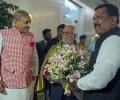
They said a 'mock poll' would be conducted in the Central Hall of the Samvidhan Sadan at around 2:30 PM on Monday after the briefing on the procedure to vote in the vice presidential polls.

The Supreme Court is considering entrusting the CBI with the investigation into digital arrest cases, citing the magnitude and pan-India spread of such crimes. The court has sought details of FIRs registered in different states and union territories and is monitoring the progress of the investigation.

The Supreme Court has ruled that a bank's one-time settlement (OTS) scheme cannot be invoked as a matter of right and that borrowers must strictly comply with its mandatory conditions, including upfront payment of a specified portion of dues, to avail themselves of the benefits of the scheme.
The Supreme Court is scheduled to hear a plea for the restoration of statehood to Jammu and Kashmir. The plea highlights the delay in restoration and its impact on democratic rights and development.

The BJP on Saturday disassociated itself from the criticism of the Supreme Court by its MPs Nishikant Dubey and Dinesh Sharma. Party president J P Nadda rejected the comments as their personal views and affirmed the ruling party's respect for the judiciary as an inseparable part of democracy. Nadda said he has directed both the leaders and other members of the party to not make such comments.
The Karnataka High Court has ordered an investigation into a city civil court judge's conduct after he cited non-existent Supreme Court rulings in a case. The High Court expressed concern over the judge's actions, stating that the matter required further investigation. The case involved a revision petition challenging the civil court's jurisdiction in a commercial dispute. Senior Counsel Prabhuling Navadgi, representing the petitioners, argued that the lower court had rejected their application based on citations of judgments that did not exist. The High Court also allowed the revision petition, finding that the plaintiffs had used a tactic to file the case in a court that lacked jurisdiction.

The Supreme Court has directed authorities to relocate stray dogs from institutional areas like schools and hospitals to designated shelters due to a rise in dog bite cases. The court also addressed the issue of stray animals on highways.
The Supreme Court of India has ruled that a gift (hiba) under Mohammedan Law is valid even without a written document, provided certain essential conditions are met.
A five-judge Constitution bench of the Supreme Court is scheduled to consider the Presidential reference on whether timelines could be imposed by judicial orders for the exercise of discretion by the President while dealing with bills passed by state assemblies.
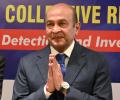
A three-judge panel appointed by the Supreme Court of India has submitted its inquiry report to the Chief Justice of India on the cash discovery allegations against Allahabad High Court judge Justice Yashwant Varma. The panel, comprising Justice Sheel Nagu, Justice G S Sandhawalia, and Justice Anu Sivaraman, finalized its report on May 3. The report was submitted to the CJI on May 4 for further actions. The controversy was raised following a news report about the cash discovery row after a fire at Justice Varma's residence in Delhi on March 14. The report reportedly contains the findings of the panel into the alleged cash discovery row. Justice Varma has denounced any insinuation and said no cash was ever placed in the storeroom either by him or any of his family members.

The Supreme Court has taken serious note of the digital arrest of a senior citizen couple in Haryana based on forged orders, highlighting the rising number of such cases and seeking responses from the Centre and CBI.

Indian Super League (ISL) clubs on Friday formally proposed a fundamental restructuring of the country's top-tier professional football league, seeking perpetual operational and commercial rights for a club-owned league model while retaining the All India Football Federation (AIFF) as the sport's regulator.

iPhone maker tells Delhi HC the antitrust watchdog has no jurisdiction to consider its global turnover.
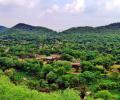
The Centre has rejected claims that the new definition of the Aravalli range will allow large-scale mining, asserting that 90 per cent of the region will remain protected and citing a Supreme Court-ordered freeze on new mining leases.
